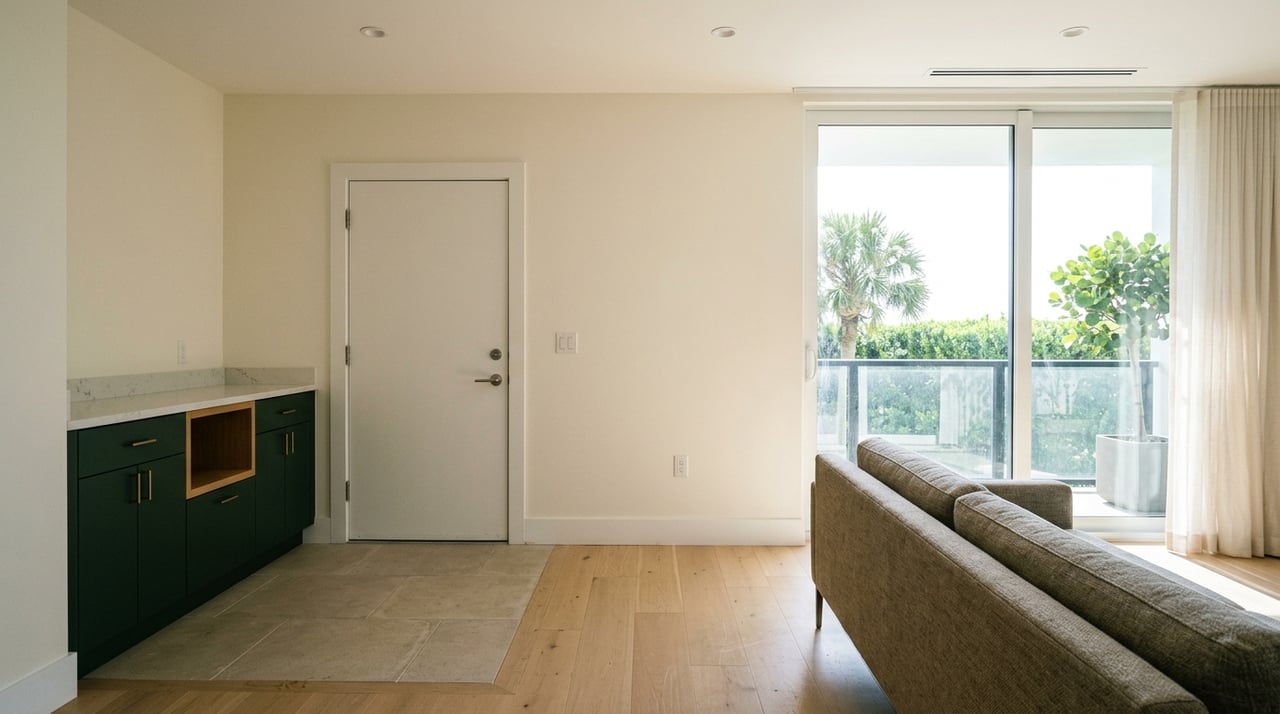
Buying A Condo In New Smyrna Beach For Occasional Use
May 7, 2026
May 7, 2026
If you are thinking about buying a condo in New Smyrna Beach for part-time living, you are probably looking for something simple, comfortable, and easy to enjoy when you want to get away. But in this market, the real questions often go far beyond finishes and views. You also need to understand flood exposure, condo rules, building condition, and how stable the association’s finances really are. This guide will help you focus on the issues that matter most so you can make a more confident decision. Let’s dive in.
Buying a condo you plan to use only part of the year is not the same as buying a full-time home. You may be away for long stretches, which makes predictability more important than convenience alone. A beautiful unit can still come with hidden costs if the building needs major work or the association is underfunded.
In New Smyrna Beach, those questions carry extra weight because of the coastal setting. The city points property owners to FEMA flood maps, and those maps are used by lenders and insurers to identify flood-risk areas and determine when flood insurance may be required. That means flood-zone review should be part of your process early, not something you check at the end.
When buyers shop for an occasional-use condo, it is easy to focus on the kitchen, balcony, or updates inside the unit. Those details matter, but the bigger financial story usually lives at the building level. In many cases, your future costs will be shaped more by the building’s condition than by the finishes you can see during a showing.
Florida’s condo laws create added inspection requirements for certain older buildings. In general, a building that is three habitable stories or more must have a milestone inspection by age 30 and every 10 years after that. Florida law also allows local enforcement to require milestone inspections by age 25 when local conditions, such as proximity to salt water, justify it.
For a New Smyrna Beach buyer, this matters because coastal exposure can affect long-term maintenance planning. If a building is older and near salt water, you want to know whether inspections have been completed, what they found, and whether repair planning is already underway. That can directly affect dues, timelines, and possible special assessments.
Florida requires structural integrity reserve studies for qualifying buildings. The association must distribute the study, or a notice that it is available, to owners within 45 days of receipt. For an occasional-use owner, this is one of the most important documents in the file.
A structural integrity reserve study must cover at least these items:
This gives you a clearer picture of whether the monthly cost structure is likely to stay steady or change. If a building is behind on funding or preparing for major work, your ownership costs may look very different a year from now.
Florida gives resale condo buyers important document rights, and you should use them. Before moving forward, you are entitled to receive core association documents that help explain how the building is run, what the finances look like, and whether major inspections or reserve studies have been completed.
For a resale condo purchase, Florida law entitles you to receive:
These documents can tell you a lot about your day-to-day ownership experience. They can also reveal restrictions, deferred maintenance concerns, and signs that the association may need more funding.
For resale contracts entered into after December 31, 2024, Florida law requires conspicuous disclosure of whether a required milestone inspection, turnover inspection report, or structural integrity reserve study has been completed. That makes the contract itself an early checkpoint.
If the answer is unclear, treat that as a prompt for more review. A part-time owner usually benefits from fewer surprises, so it is worth slowing down and making sure the compliance picture is fully understood.
In a resale transaction, the contract is generally voidable by the buyer for 7 days after execution and receipt of the required documents, excluding Saturdays, Sundays, and legal holidays. If the required documents were not delivered, the buyer may have broader cancellation rights before closing.
That time matters. It gives you a window to review the association package carefully and decide whether the building fits your goals, your budget, and your comfort level.
For an occasional-use condo, association records often tell you more than marketing remarks ever will. Florida requires official records to be kept in an organized manner and made available to unit owners within 10 working days after a written request, at a location within 45 miles of the property or in the same county. Required website posting, where applicable, can also count as official-record access.
These records are maintained in Florida for at least 7 years and can include plans, permits, warranties, governing documents, meeting minutes, and other important operating records. For you, this is where the practical story lives.
When reviewing records, focus on issues that affect remote or part-time ownership:
This kind of review helps you understand whether the building is well-managed and whether claimed updates are supported by documentation. It also helps you avoid relying only on appearances.
One common mistake buyers make is assuming condo ownership means everything outside the unit is automatically handled in a simple, low-risk way. Florida law says the association is responsible for maintenance of the common elements, except for limited common-element maintenance assigned to the unit owner by the declaration. The association must also provide for maintenance, repair, and replacement of condominium property for which it is responsible under the declaration.
That last phrase is important. The declaration controls where association responsibility ends and owner responsibility begins. You should never assume that a polished building exterior or newly updated lobby tells the full story.
If you plan to use the condo occasionally, you want clear boundaries around responsibility. Interior unit maintenance is generally not the association’s obligation, and reserve budgeting can exclude personal expenses such as maintenance inside units. Understanding that split helps you budget more realistically.
Monthly condo dues are only part of the ownership cost picture. In Florida, budget and reserve rules for qualifying associations have become more structured, especially for buildings that must complete a structural integrity reserve study. For budgets adopted on or after December 31, 2024, a unit-owner-controlled association that must complete a SIRS may not choose to provide no reserves or less reserves than required for statutory reserve items unless an approved alternative funding method is in place.
That can be good for long-term building health, but it can also mean higher current costs. In some cases, associations may also use a line of credit or loan to fund capital expenses required by a milestone inspection or reserve study, and related special assessments or loans must be disclosed in the annual financial statement.
For an occasional-use buyer, this comes down to one question: are the carrying costs stable, or is the building in the middle of a financial reset? That is the kind of answer you want before closing, not after.
In New Smyrna Beach, flood review should happen near the start of your search. The city’s flood-protection information explains that FEMA flood maps are used by lenders and insurers to determine flood-risk areas and insurance requirements. The city also notes that flood insurance can provide economic protection and peace of mind.
Even if you are comfortable with coastal ownership, do not assume flood exposure will have only a small effect on your costs. Insurance and lender requirements can shift your monthly budget, so it is smart to verify the flood zone before relying on any carrying-cost estimate.
Florida law requires the association to use its best efforts to obtain and maintain adequate insurance for the association, association property, common elements, and condominium property required to be insured by the association. The law also allows the association to obtain flood insurance for common elements, association property, and units. That does not remove the need to understand your own potential insurance obligations.
Many second-home buyers want the option to rent the condo when they are not using it. In New Smyrna Beach, you need to confirm both the city rules and the condo association rules. One does not replace the other.
New Smyrna Beach allows short-term rentals of less than 30 days only in specific zoning districts. According to the city’s brochure, those zones include certain districts east of the Intracoastal Waterway, a limited set of districts east of the waterway and south of Third Avenue, and M-U and BBH districts west of the waterway.
The city also states that rentals of 30 days or longer are allowed anywhere in the city with a Business Tax Receipt, and that a 30-day stay is required. Rentals of less than 30 days once a month are still considered short term.
A Business Tax Receipt is an annual city receipt required before doing business in New Smyrna Beach. The city says a new business owner must pass an initial inspection before the receipt is issued.
If you plan to rent your condo occasionally, build this into your timeline. City approval is separate from condo approval, so both need to line up.
Even if city zoning allows a rental use, the condominium documents may limit or prohibit it. This is one of the biggest disconnects second-home buyers face. The city may allow the use in theory, but the declaration, bylaws, or rules may not allow it in that building.
That is why condo document review is so important. If rental flexibility matters to you, verify it in writing before moving forward.
If you rent your condo for a term of 6 months or less, Volusia County says you are responsible for collecting and remitting the county’s Tourist and Convention Development Tax. Volusia’s current local transient rental tax rate is 6%, and Florida’s general state sales tax rate is also 6%.
That does not mean occasional renting is a bad idea. It simply means you should evaluate the numbers clearly and understand the compliance side before assuming rental income will be easy or passive.
Some buyers ask whether an occasional-use condo can receive homestead treatment. Volusia County’s homestead exemption rules require you to own and occupy the home as your permanent residence by January 1. For a condo used only part of the year, that generally will not fit the homestead model.
That is another reason to think carefully about the purpose of the purchase. A part-time personal-use condo is often best evaluated on lifestyle value, carrying costs, and long-term ownership fit rather than assumptions tied to permanent residence status.
If you are buying a condo in New Smyrna Beach for occasional use, the strongest approach is a process-first one. Start with flood zone review, building age, inspection status, reserve funding, and rental rules before getting too attached to the décor or view. Those are the factors most likely to shape your ownership experience.
At Sandroni Holdings Real Estate, the goal is to bring calm, organized guidance to purchases that have a lot of moving parts. If you want help evaluating condo documents, narrowing your search, or understanding the tradeoffs between personal use and rental flexibility, connect with Sandroni Holdings Real Estate.
Stay up to date on the latest real estate trends.



Whether you’re buying, selling, or investing, Sandroni Holdings Real Estate offers more than representation—we offer partnership. Connect with our team and experience a brokerage where your goals are treated with purpose, precision, and respect.