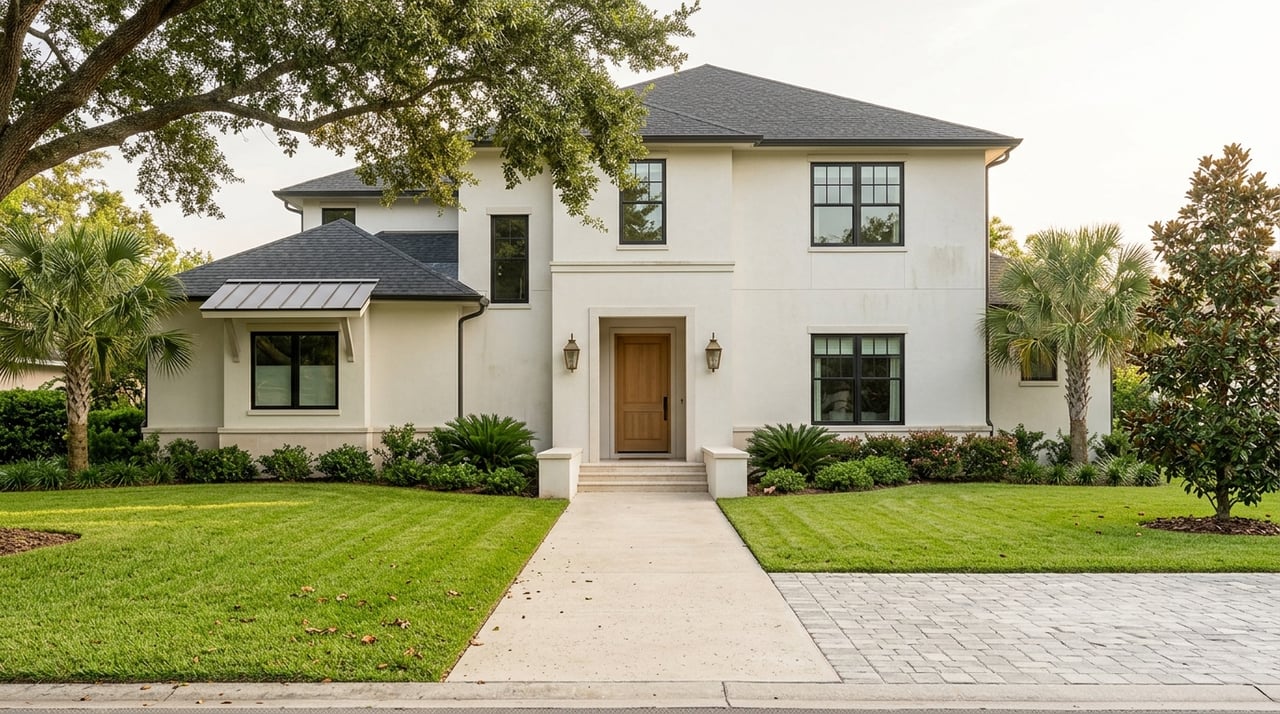
Living In Orlando Beyond The Theme Parks
April 2, 2026
April 2, 2026
If you only know Orlando for its theme parks, you are missing the city most residents actually experience every day. Orlando is a large, fast-growing city with distinct neighborhoods, job centers, trails, business districts, and local gathering spots that shape daily life far beyond the visitor corridor. If you are thinking about a move, a sale, or simply trying to understand how Orlando really lives, this guide will help you see the city through a local lens. Let’s dive in.
Orlando has roughly 335,000 residents spread across about 138 square miles, within a metro area of about 2.9 million people. According to the City of Orlando’s 2024 financial report, the city also tracks 12 Main Street districts plus Lake Nona, which reflects how Orlando functions as a collection of active local districts rather than one single destination.
That local structure matters when you are choosing where to live. Some parts of Orlando feel urban and walkable, some offer older close-in neighborhoods with established character, and others are newer mixed-use or master-planned districts with their own retail, parks, and employment hubs. In practical terms, your day-to-day experience can look very different depending on which part of the city you call home.
A common misconception is that Orlando’s economy revolves only around visitors. In reality, the city’s market report points to key industries such as digital media, life sciences, and modeling, simulation, and training.
That broader job base gives Orlando a more layered feel for residents. You may work in healthcare, research, education, logistics, technology, or a tourism-adjacent role, but the point is the city supports more than one type of career path.
The University of Central Florida is a major part of that story. UCF reports that it and the adjacent Central Florida Research Park connect with more than 12,300 employees in nearby research-focused work, while its business incubation efforts have helped create and sustain more than 6,200 local jobs.
If you are drawn to east Orlando, this helps explain why the area functions as more than a college zone. It is also tied to research, innovation, and a steady employment base that influences where people choose to live and commute.
Lake Nona is one of the clearest examples of Orlando’s newer, resident-oriented development. The city describes it as a 17-square-mile master-planned community near SR 417, Narcoossee Road, and Orlando International Airport, with Medical City at its core.
That health and research cluster includes Nemours Children’s Hospital, the Orlando VA Medical Center, the UCF College of Medicine, the UCF Academic Health Sciences Campus, and the Guidewell Innovation Center, according to the city’s market report. For you, that can mean a lifestyle built around proximity to work, newer infrastructure, and planned retail and recreation.
Healthcare is not limited to Lake Nona. The city’s Main Street materials note that Orlando Health has been a mainstay in SoDo since 1918, reinforcing how healthcare supports daily life and employment across multiple parts of Orlando.
This is useful context if you want to organize your housing search around a major employer or a shorter commute. In Orlando, healthcare-related job access touches the urban core, south Orlando, and several surrounding Central Florida communities.
One of the biggest truths about living in Orlando is that where you live affects how you live. Commute routes, access to parks, proximity to work, and even your weekday routine can vary widely by district.
The Central Florida Expressway Authority describes a regional network that includes SR 408, SR 417, SR 528, and SR 429. SR 408 in particular connects downtown venues, the airport corridor, Valencia College, UCF, Lockheed Martin, and Waterford Lakes, which shows how location decisions often come down to your most frequent routes.
Outside the most urban pockets, Orlando still feels car-oriented for many residents. That does not make it hard to live here, but it does mean your side of town matters.
When you are comparing neighborhoods, it helps to think beyond square footage or style. A home that looks perfect on paper may feel less practical if your weekly pattern includes crossing the metro often for work, errands, or appointments.
Transit does play a role, especially in and around downtown. SunRail now runs 61 miles across 17 stations in four counties, including Orlando stations such as LYNX Central Station, Church Street, Orlando Health/Amtrak, and Sand Lake Road.
LYNX adds 62 local routes across Orange, Osceola, and parts of Seminole counties, while LYMMO provides free downtown bus rapid transit service linking Creative Village, LYNX Central Station, and downtown Orlando. If you want a more car-light routine, the urban core offers the strongest options.
Orlando also has meaningful trail and bike infrastructure. The city says its trail network exceeds 40 miles, and growth-management indicators report 325 miles of bikeways citywide.
For many residents, that adds value beyond recreation. Trails such as the Orlando Urban Trail, Cady Way Trail, and Lake Underhill Path can connect you to parks, retail, and nearby activity centers, which can make weekends and short local trips feel easier and more enjoyable.
One of Orlando’s biggest strengths is variety. Instead of thinking about the city as one broad market, it often makes more sense to think in terms of lifestyle districts.
College Park sits just outside downtown and is described by the city as a vibrant neighborhood with bungalow-style homes, brick tree-lined streets, parks, lakes, and a strong local retail and restaurant base.
If you want a neighborhood-first environment with quick access to the core, College Park often stands out. It offers a close-in setting without feeling like the center of downtown.
Thornton Park and downtown Orlando offer one of the city’s most walkable, urban-feeling environments. The district east of Lake Eola is described in city materials as having brick-lined streets, a European feel, and more than 50 locally owned shops, services, and dining destinations.
Lake Eola adds another layer of daily life with swan boats, concerts, festivals, and the Sunday farmers market that has operated since 1987. If you want an urban routine with frequent events and easy access to the city core, this area deserves a close look.
For buyers who value a more locally driven setting, Audubon Park Garden District, Ivanhoe Village, and Mills 50 highlight another side of Orlando. These districts are associated with independent retail, cafes, bakeries, galleries, design shops, and walkable commercial corridors.
City materials describe Mills 50 as centrally located, culturally diverse, eclectic, and walkable. Taken together, these districts show how Orlando supports creative, neighborhood-scale living beyond newer planned development.
Baldwin Park is one of Orlando’s best-known master-planned communities. City planning materials describe it as the city’s first large-scale new urbanism development, with integrated land uses, walkable neighborhoods, traditional grid streets, extensive park space, and trails along the lakes.
For you, that can mean a more intentionally designed environment where housing, parks, and commercial space work together. It is often a useful option if you want walkability in a planned setting rather than in the downtown core.
Lake Nona continues to stand out for buyers seeking a newer, purpose-built district. The city highlights its walkable town center, sports and performance district, parks, trails, golf amenities, and Medical City employment base.
That combination can appeal if you want a modern, mixed-use environment with strong ties to healthcare, research, and airport access. It is a good example of how Orlando continues to grow in ways shaped by resident needs, not just tourism.
SoDo, Creative Village, and West Lakes show Orlando’s continued reinvention. SoDo is described as a business district within one mile of downtown, surrounded by historic neighborhoods, lakes, and walkable streets.
Creative Village is being built around education, job training, mixed-income housing, and business growth, while West Lakes is positioned around Camping World Stadium and Lake Lorna Doone as a sports, festival, and concert destination. If you are watching where Orlando is changing, these districts are worth understanding.
If you are buying in Orlando, the biggest takeaway is to match the home search to your real routine. Start with where you work, how often you commute, what kind of neighborhood setting you prefer, and whether you want a more urban, established, or newly planned environment.
If you are selling, it helps to position your home within the lifestyle story buyers are actually shopping for. In Orlando, that story is often about access to a district, a commute pattern, a trail network, a local commercial corridor, or a healthcare or research hub.
The city is also feeling housing pressure. Orlando’s 2024 financial report notes that population growth outpaced housing growth from 2020 to 2024, leaving a shortage of about 9,400 units even with thousands of units under construction or under review. That kind of supply-and-demand context can influence how buyers evaluate options and how sellers think about timing.
Living in Orlando beyond the theme parks means understanding the city as residents do: a network of districts with different rhythms, housing choices, job access points, and daily conveniences. Your best fit may be a bungalow near a local retail street, a condo close to downtown, or a newer home in a master-planned area tied to major employment centers.
When you look at Orlando this way, the decision becomes clearer and more practical. If you want guidance that is local, organized, and relationship-driven, Sandroni Holdings Real Estate can help you navigate Orlando with precision and care.
Stay up to date on the latest real estate trends.
Whether you’re buying, selling, or investing, Sandroni Holdings Real Estate offers more than representation—we offer partnership. Connect with our team and experience a brokerage where your goals are treated with purpose, precision, and respect.